Product Designer | Enterprise Products & Technical Systems
Bangalore, India | reachvinay@gmail.com | +91 988 673 1225
→
Merchant Risk Analytics - Fraud Prevention Platform
Role
UX Designer & Researcher
Project Overview
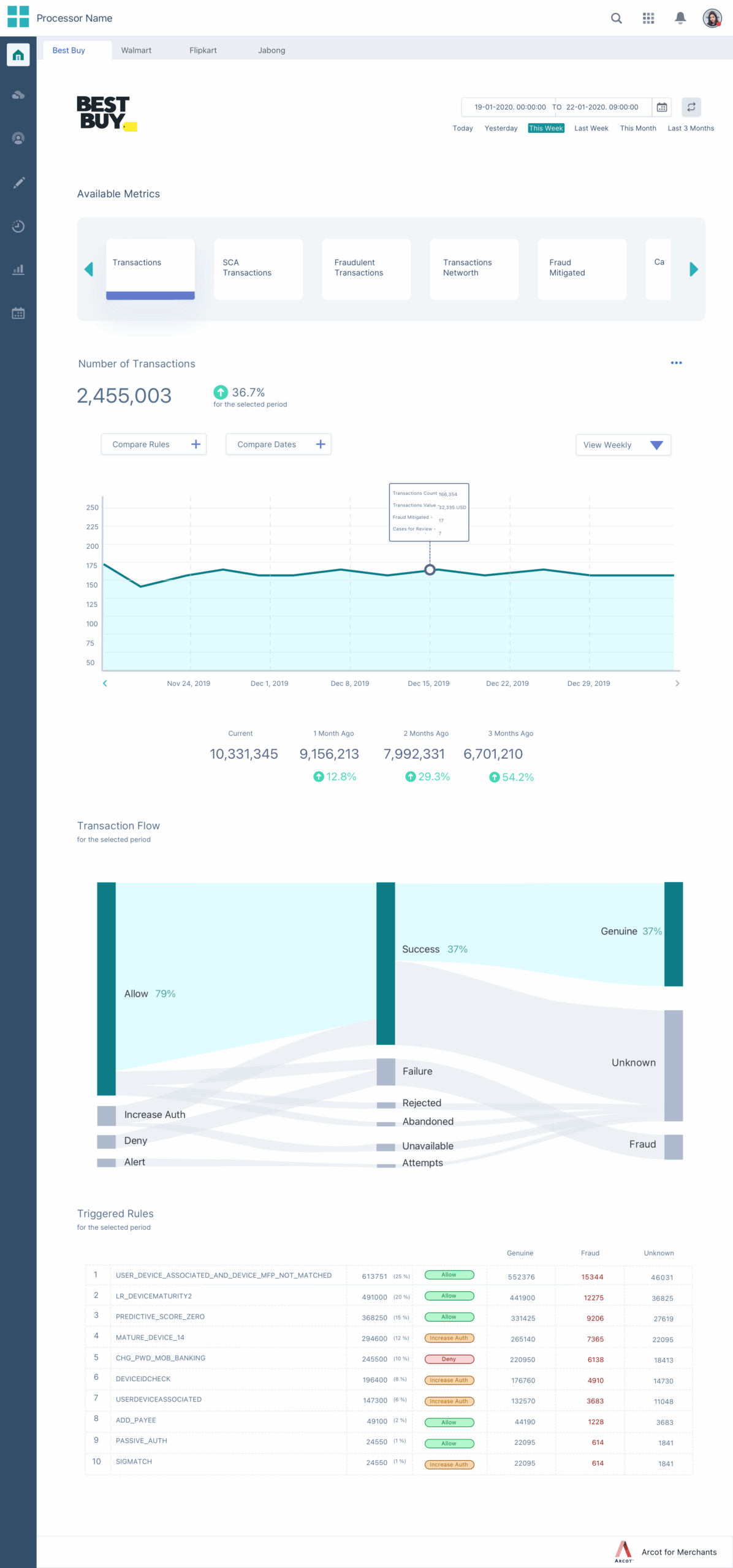
Designed a comprehensive fraud prevention platform for merchants losing billions to card-not-present fraud. The challenge was creating a tool powerful enough for technical fraud analysts while accessible to business users—without sacrificing the customer experience for legitimate shoppers.
The Challenge
E-commerce merchants face a brutal equation: CNP fraud costs billions, but aggressive fraud prevention drives away real customers. False declines mean lost revenue. Slow authentication means cart abandonment. And fraud patterns evolve faster than traditional systems can adapt.
The existing tools weren't cutting it:
Traditional fraud prevention models couldn't keep up with evolving patterns
Systems created friction that hurt the customer experience
False declines were costing merchants real money
Risk engines couldn't see customer behavior across channels
Compliance with PSD2 and card scheme requirements added complexity
Research & Discovery
I conducted user research surveys at annual trade shows and analyzed existing customers and prospects. I also leveraged knowledge from other fraud prevention products we'd built—many personas overlapped, which let me work more efficiently.
Key Findings:
Users desperately wanted better data visualization to understand complex fraud patterns
The rule-building feature needed to be more engaging—suggestions came up for gamification
There were clear opportunities to optimize workflows for personas we already understood well
MVP prioritization became clearer once we understood which features mattered most to which users
Design Approach
I developed distinct personas representing everyone from hands-on fraud analysts to strategic decision-makers. Each persona had different workflows, different pain points, and different technical skill levels.
I created high-fidelity mockups for the prioritized MVP workflows, then validated concepts with prospects. This early engagement was crucial—we caught issues and got valuable feedback before writing production code.
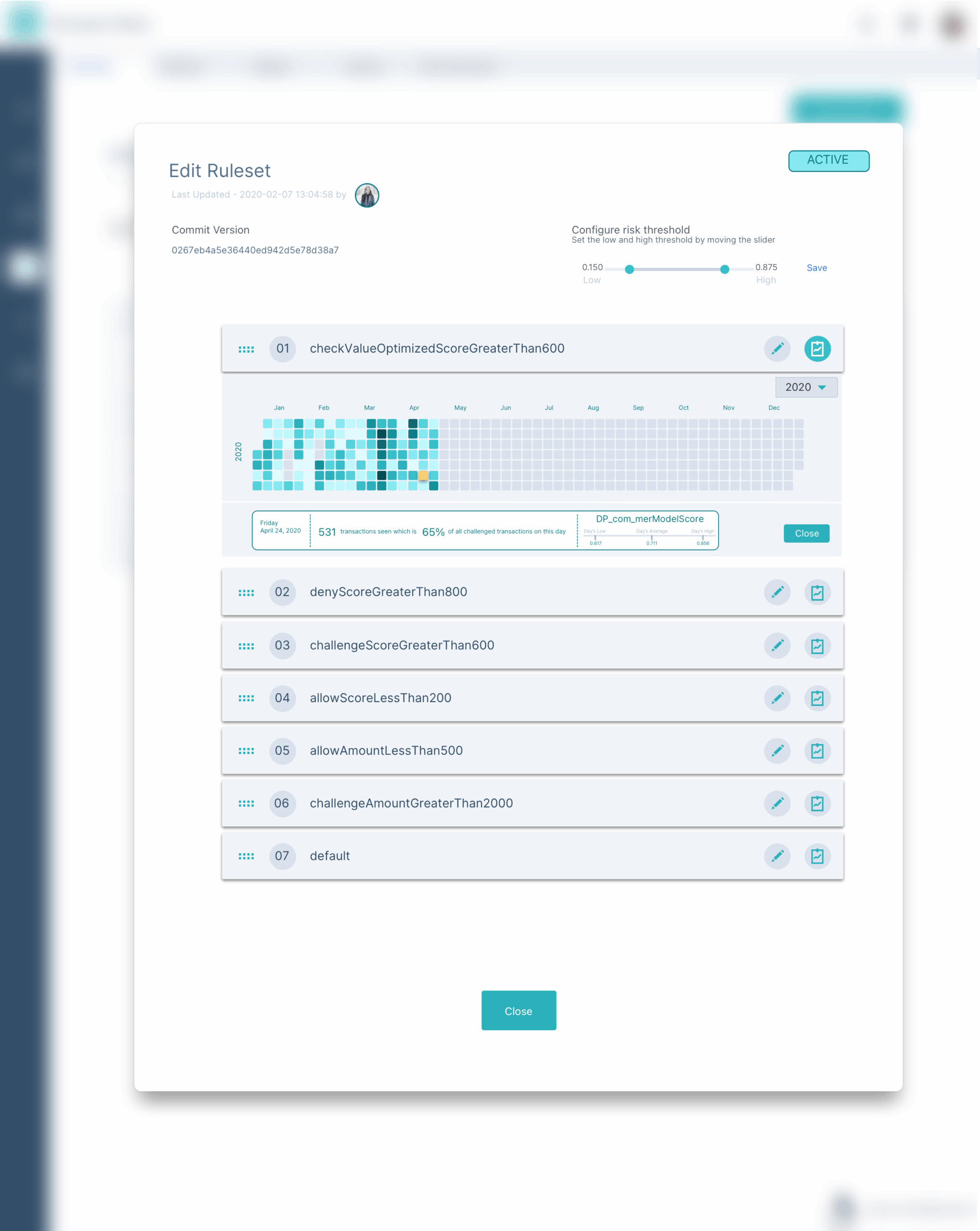
The trickiest part? Designing the rule-building interface to work for both technical users (who wanted code-level control) and non-technical users (who needed visual, wizard-driven guidance).
The Solution
A SaaS platform that combines real-time fraud detection with a frictionless customer experience:
360° Transaction Intelligence
Complete view across channels and card schemes. Merchants finally see the full picture of customer behavior, not just isolated transactions.
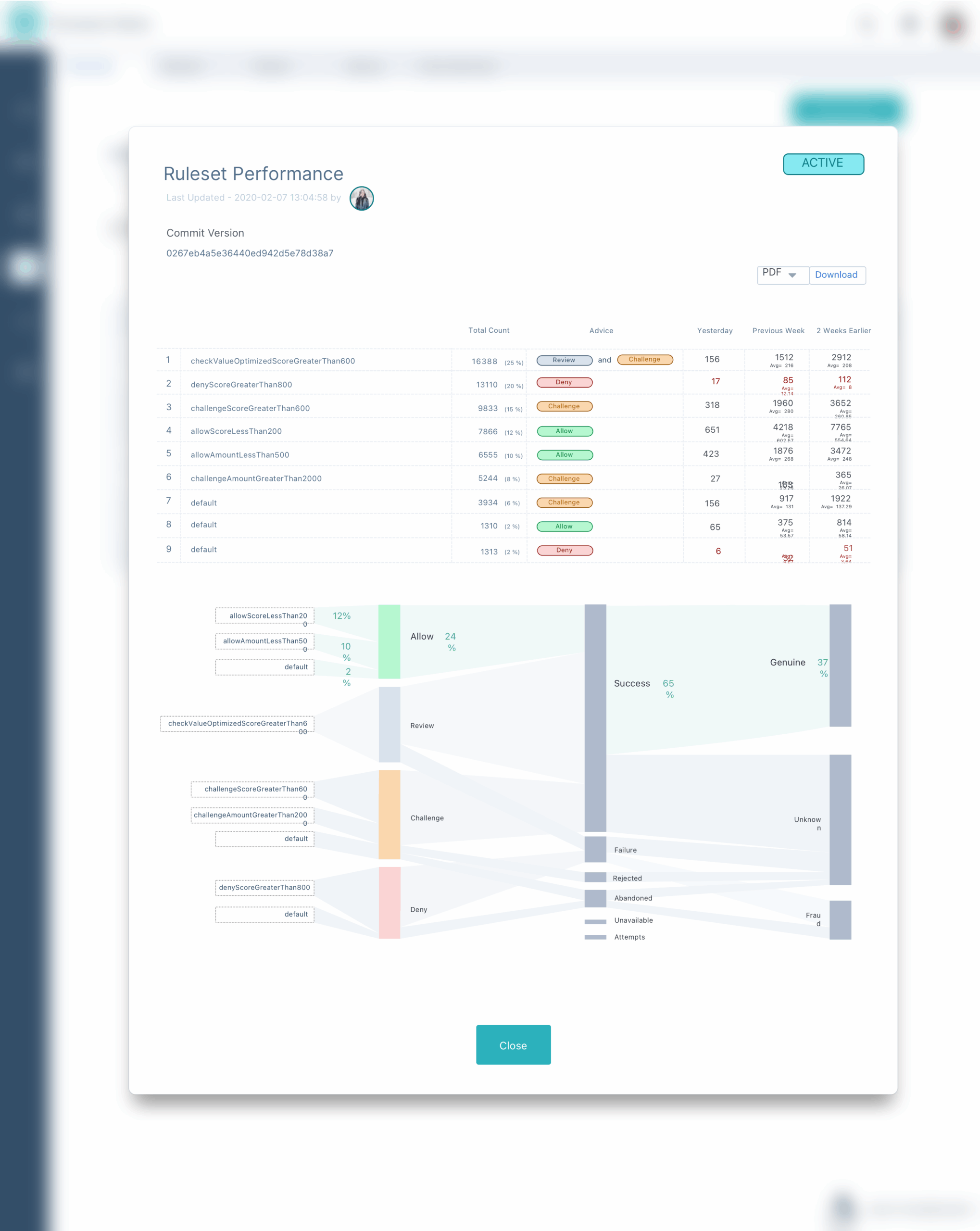
Dual-Approach Rule Building
Technical users get a programmer-friendly interface with full control. Non-technical users get a wizard-driven UI. Same powerful engine, two different ways in.
Advanced Visualization
Built-in charts and graphs eliminate the need to export data to Excel. Users can understand fraud trends at a glance and act on them immediately.
Real-Time Analytics
Machine learning and predictive analytics provide accurate risk scoring at scale. The system adapts to evolving fraud patterns instead of relying on static rules.
Role-Based Workflows
Separate, optimized interfaces for fraud strategists, analysts, customer support reps, and business decision-makers. Each role sees what they need, nothing they don't.
Implementation
We built the platform over 24 months using React for the frontend. The Python SDK enabled smooth integration with existing merchant systems.
The dual-approach strategy for rule building proved essential—we validated that some users truly needed code-level access while others needed visual guidance. Trying to force everyone through the same interface would have failed.
Results
While we don't have quantitative metrics yet, the qualitative feedback has been strong:
Enhanced Decision-Making
Merchants report that risk decisions are easier to make with the 360-degree transaction view.
User Satisfaction
The dual approach to rule building means both technical and non-technical users feel empowered. Nobody's frustrated by an interface that doesn't match their skill level.
Successful Personalization
We successfully catered to diverse personas—from fraud analysts who live in the data to executives who need high-level insights.
What I Learned
Designing for users with vastly different technical skills requires different interfaces, not just different permissions. The dual-approach strategy for rule building worked because we didn't try to force a one-size-fits-all solution.
Data visualization isn't just nice-to-have in fraud prevention—it's essential. The difference between exporting to Excel and seeing insights in real-time changes how users work.
User-centered design works, even for complex B2B applications. The interviews, concept validation, and prototyping directly contributed to the positive reception.
Early and continuous engagement with users throughout development kept us honest. We didn't build in a vacuum, and it showed in the final product.
Future Considerations
The gamification ideas for rule building remain unexplored—that could make the feature even more engaging for non-technical users. We'd also benefit from quantitative studies to measure impact on fraud prevention and operational efficiency.
Expanding data visualization options based on emerging fraud trends and continuing to enhance machine learning capabilities would keep the platform ahead of evolving threats.
Credits
Fraud Strategists & Analysts: User research and validation
Product Managers: Requirements and prioritization
Technical Architects: Platform architecture
Development Team: Implementation
Pre-Sales Team: Customer feedback and validation
Selected Works
Cap EditorEnterprise SaaS / B2B
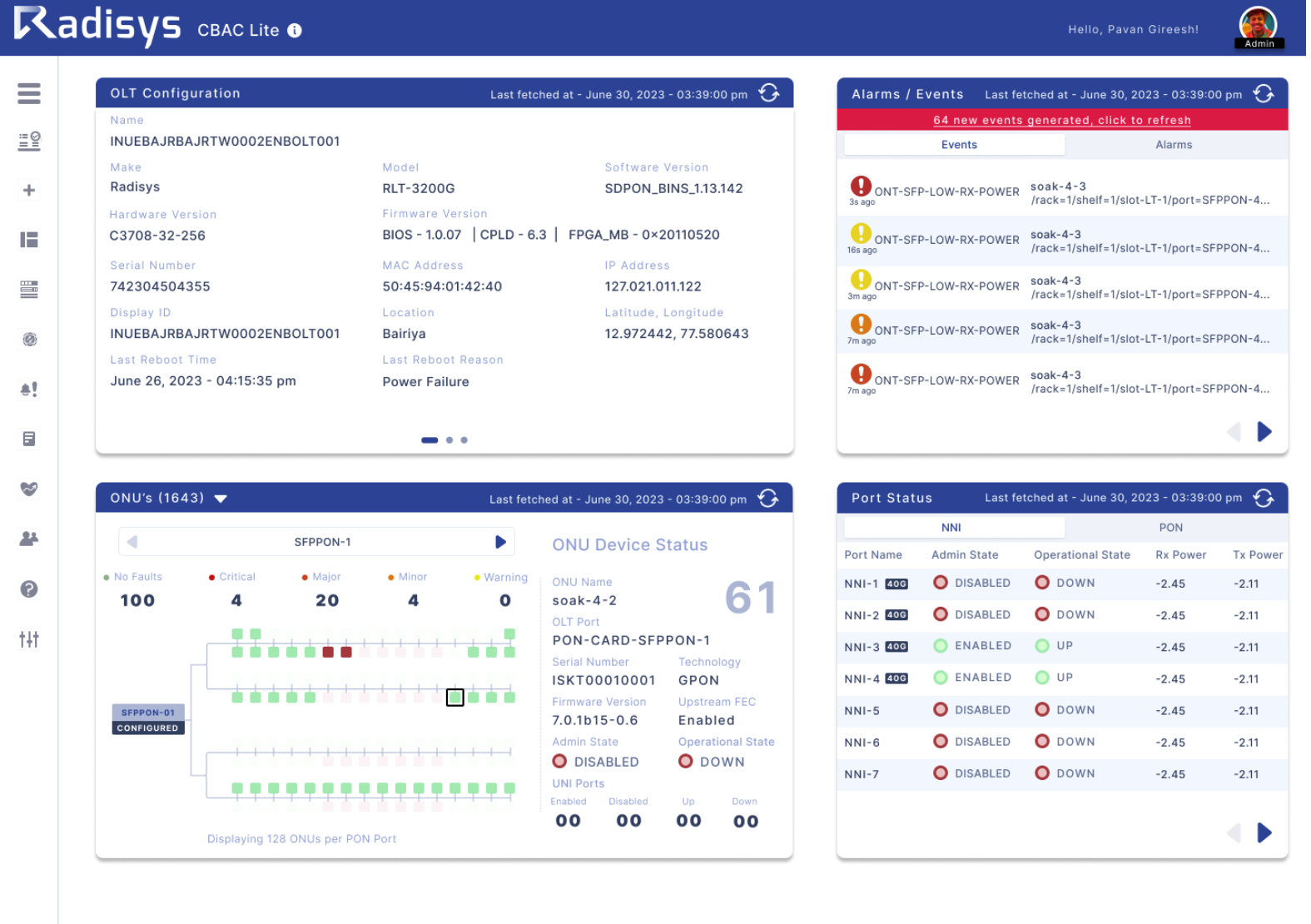
CBAC LiteEnterprise SaaS / B2B
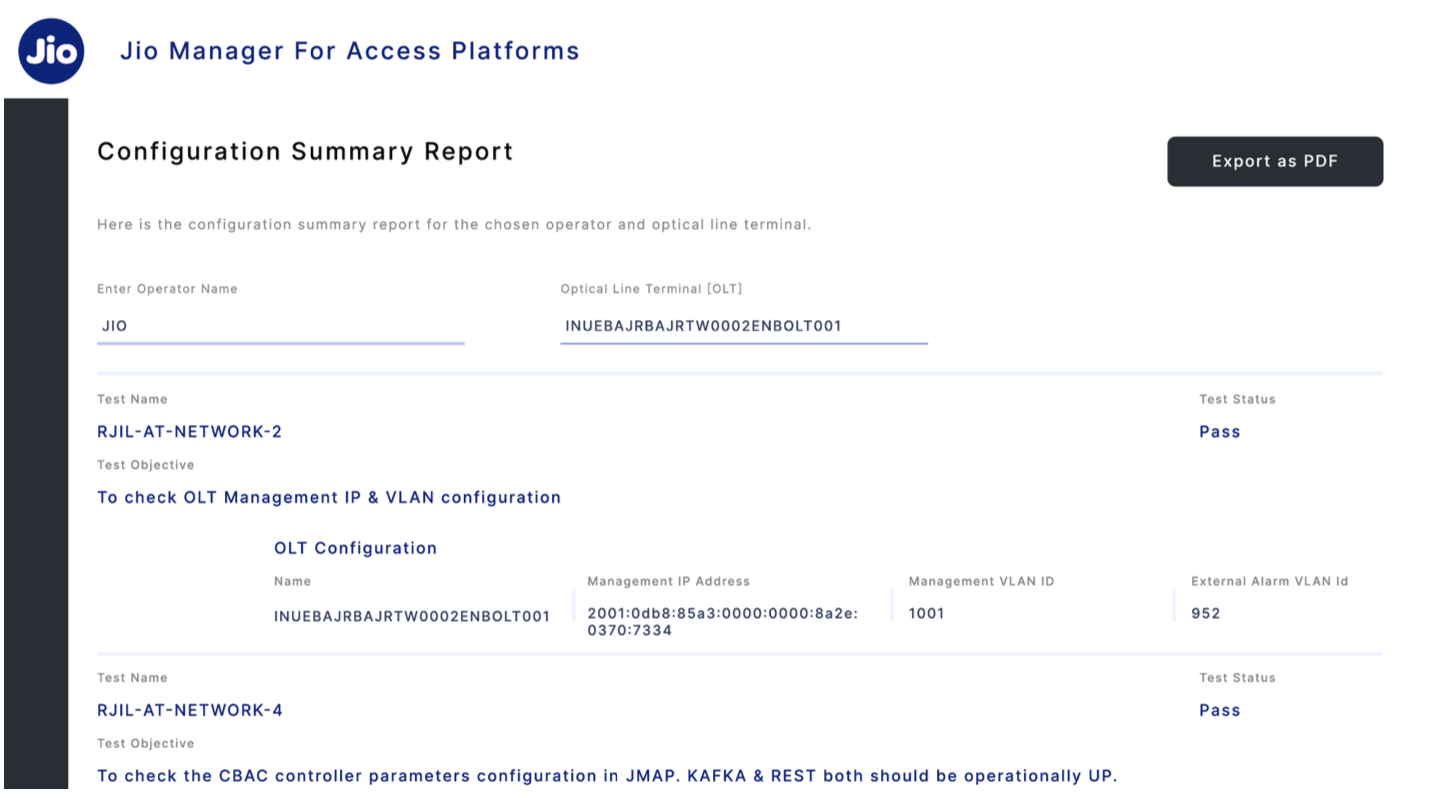
RMSEnterprise SaaS / B2B
Merchant Risk AnalyticsEnterprise SaaS / B2B
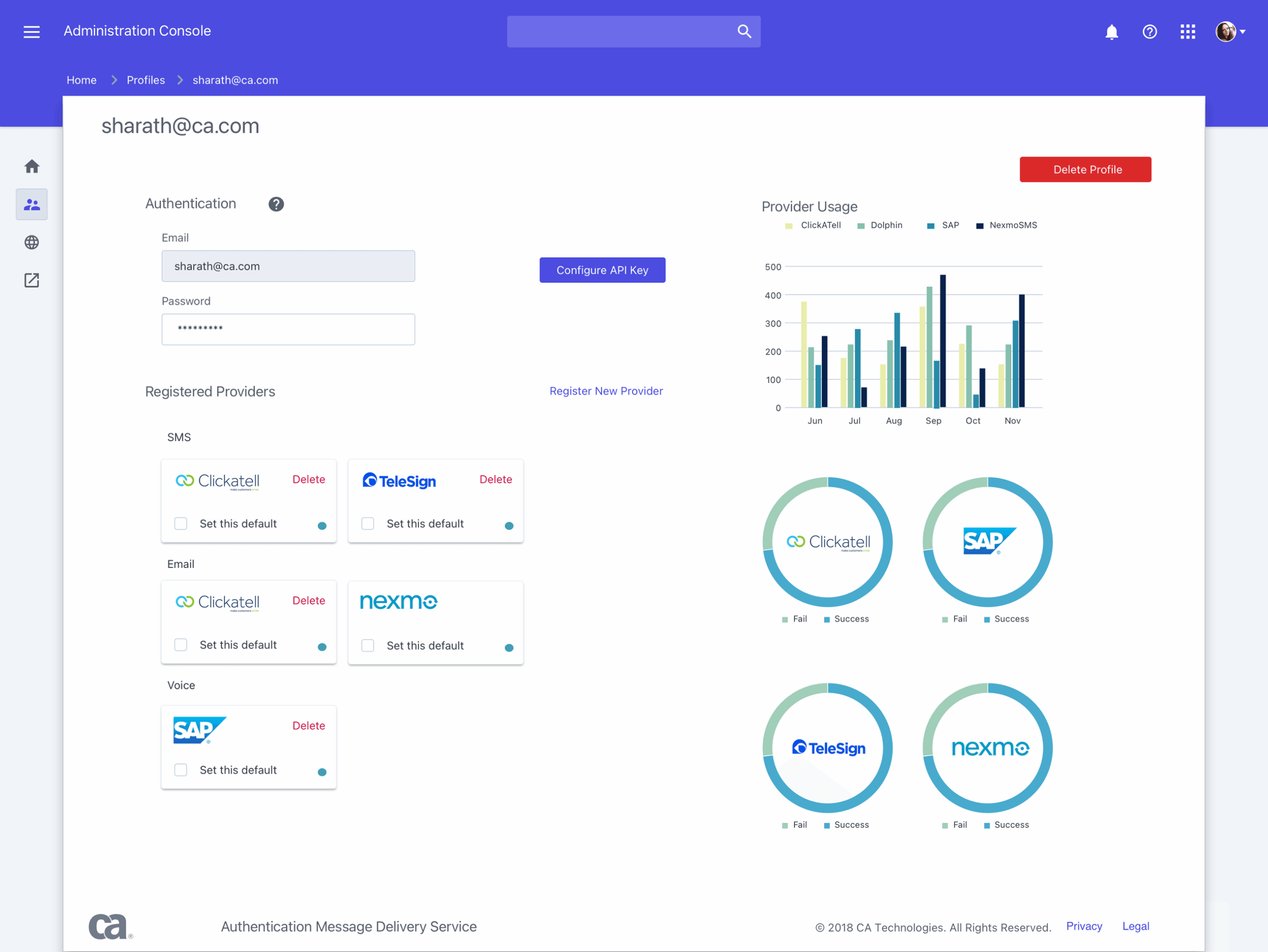
Message Delivery ApplicationEnterprise SaaS / B2B
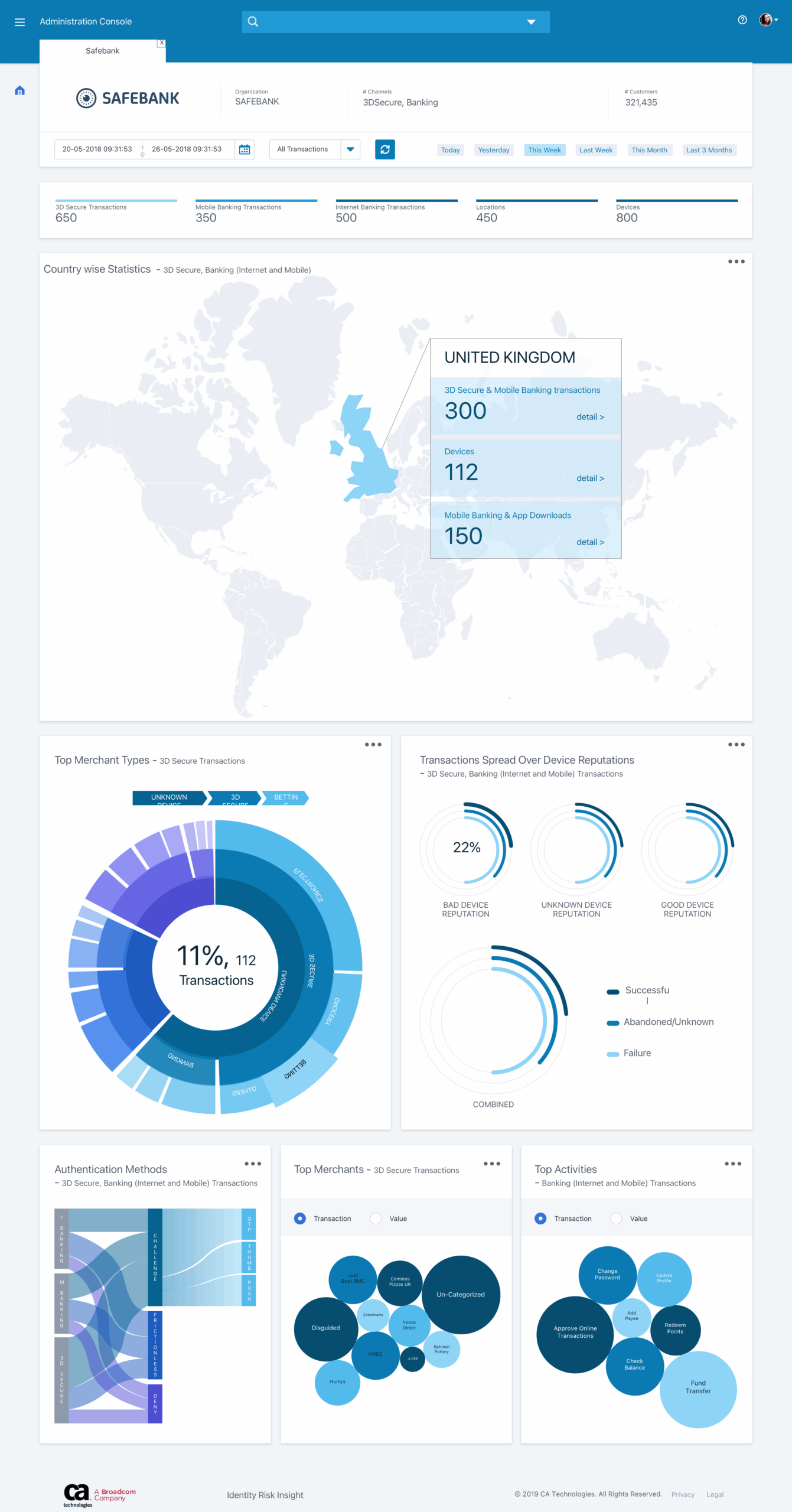
Digital Banking ApplicationEnterprise SaaS / B2B