Product Designer | Enterprise Products & Technical Systems
Bangalore, India | reachvinay@gmail.com | +91 988 673 1225
→
Digital Banking Application - Unified Authentication & Fraud Prevention
Role
UX Designer & Researcher
Project Overview
Designed a unified authentication system across all banking channels to fight CNP fraud (which accounts for 81% of total fraud) while improving the customer experience. The project aimed to eliminate the frustrating inconsistencies customers faced when moving between online banking, mobile apps, and e-commerce transactions.
Note: This project was discontinued during development due to Broadcom's acquisition of the parent company in April 2018, which shifted business priorities toward large preferred customers.
The Problem
Banks were stuck in a bind. CNP fraud was costing them billions, but their fraud prevention created such a poor experience that customers were abandoning legitimate transactions.
The Inconsistency Problem:
Online banking used passwords + OTPs
Mobile apps used PIN or biometric
E-commerce transactions used OTPs and sometimes push notifications
Customers faced different authentication methods depending on which channel they used. Worse, they often had to authenticate for simple tasks that shouldn't require it.
The Technology Problem:
Existing risk engines couldn't share data across channels. They couldn't see that this was the same customer making purchases on desktop and mobile, using the same card, from the same locations. Each channel operated in isolation.
The User Experience Problem:
OTPs failed to deliver in areas with poor mobile coverage, leading to transaction abandonment. False declines of legitimate transactions cost banks revenue and frustrated loyal customers.
Research
I analyzed third-party research, conducted user research surveys at annual trade shows, and gathered feedback from existing customers and prospects.
The pain points were consistent:
Inconsistent authentication frustrated users
Excessive authentication for simple tasks drove people away
OTP delivery failures in low-coverage areas killed transactions
Risk engines couldn't learn from cross-channel behavior
Design Approach
I developed personas representing key bank employees:
Head of Fraud
Head of Digital Channels
Fraud Strategist
Fraud Analyst
Customer Support Representative
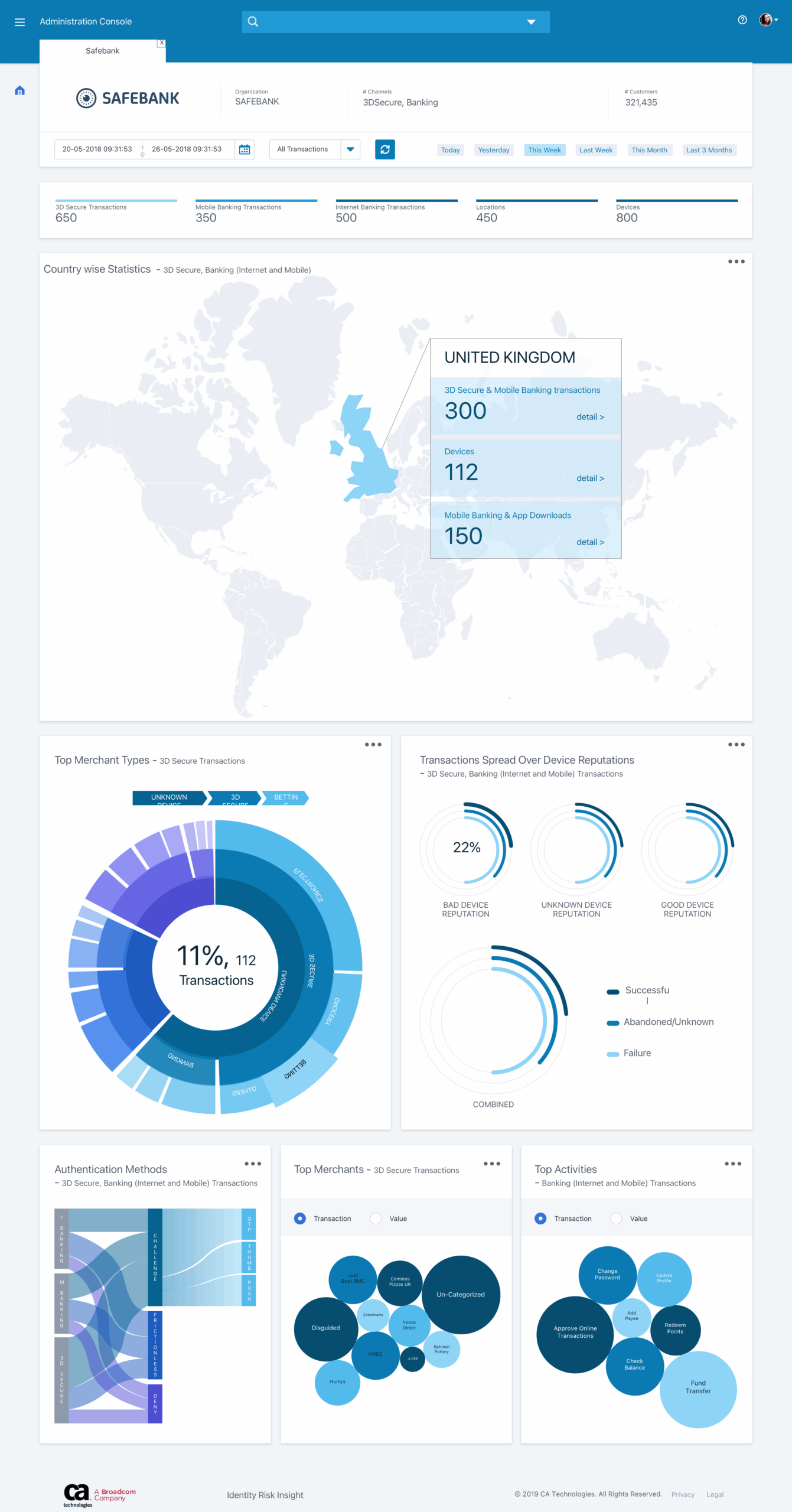
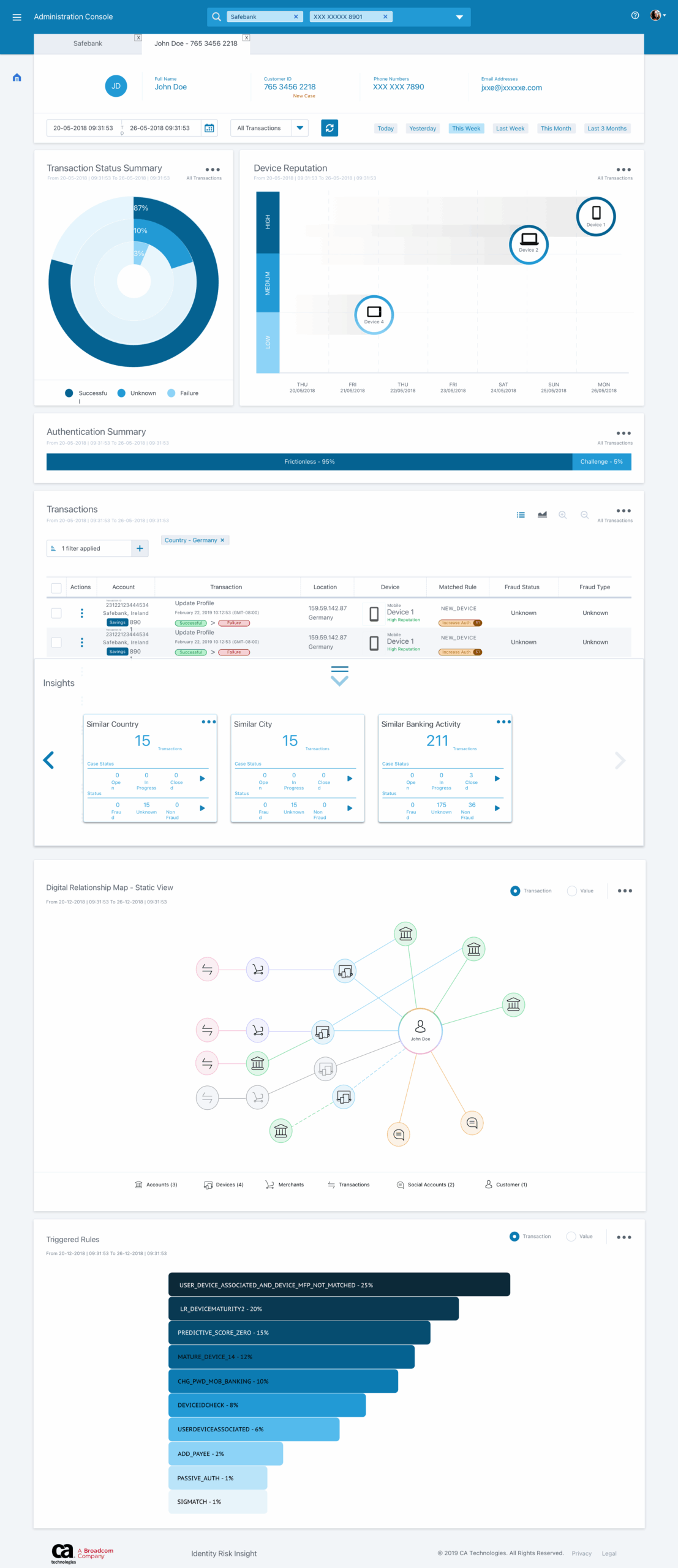
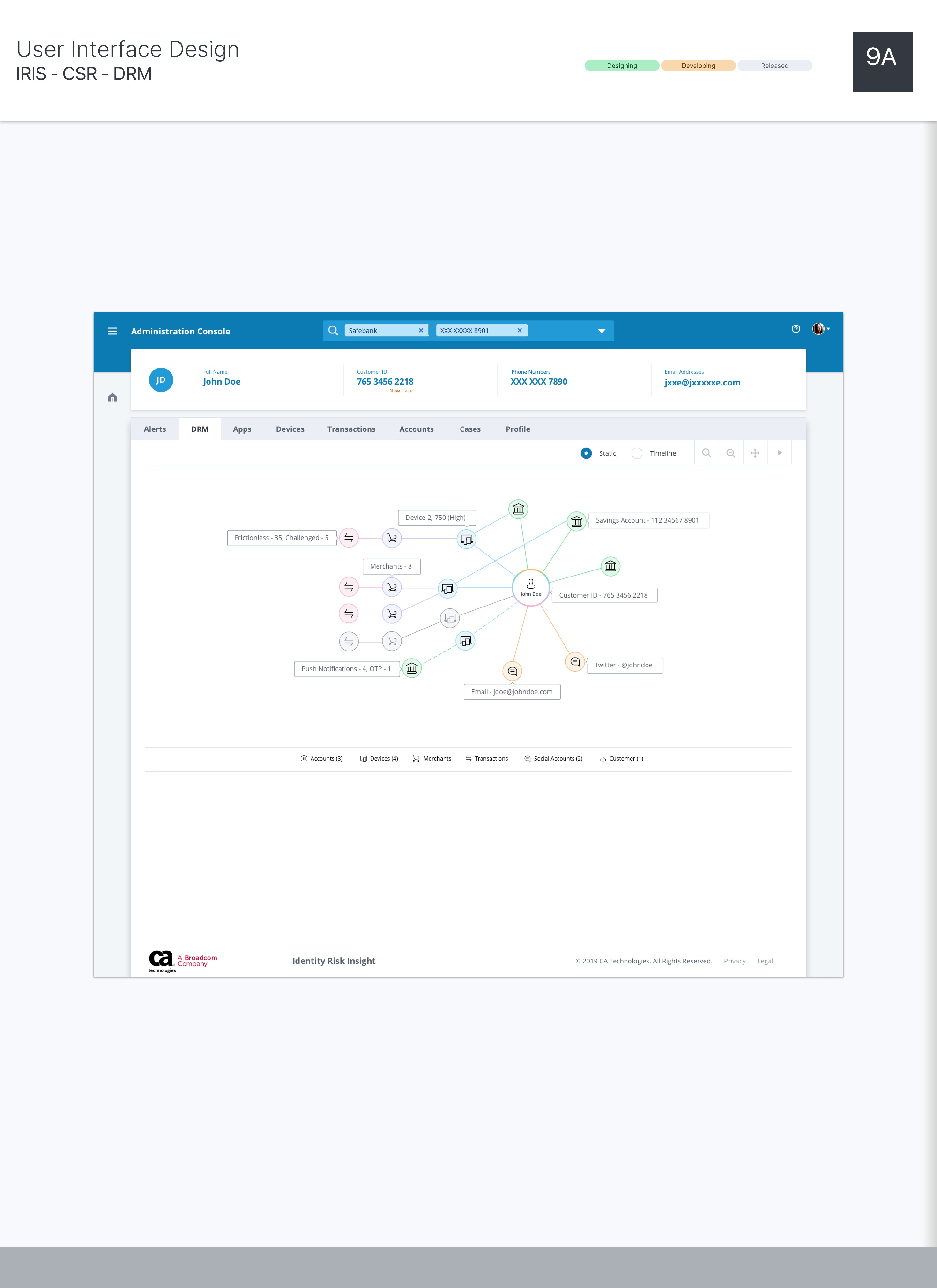
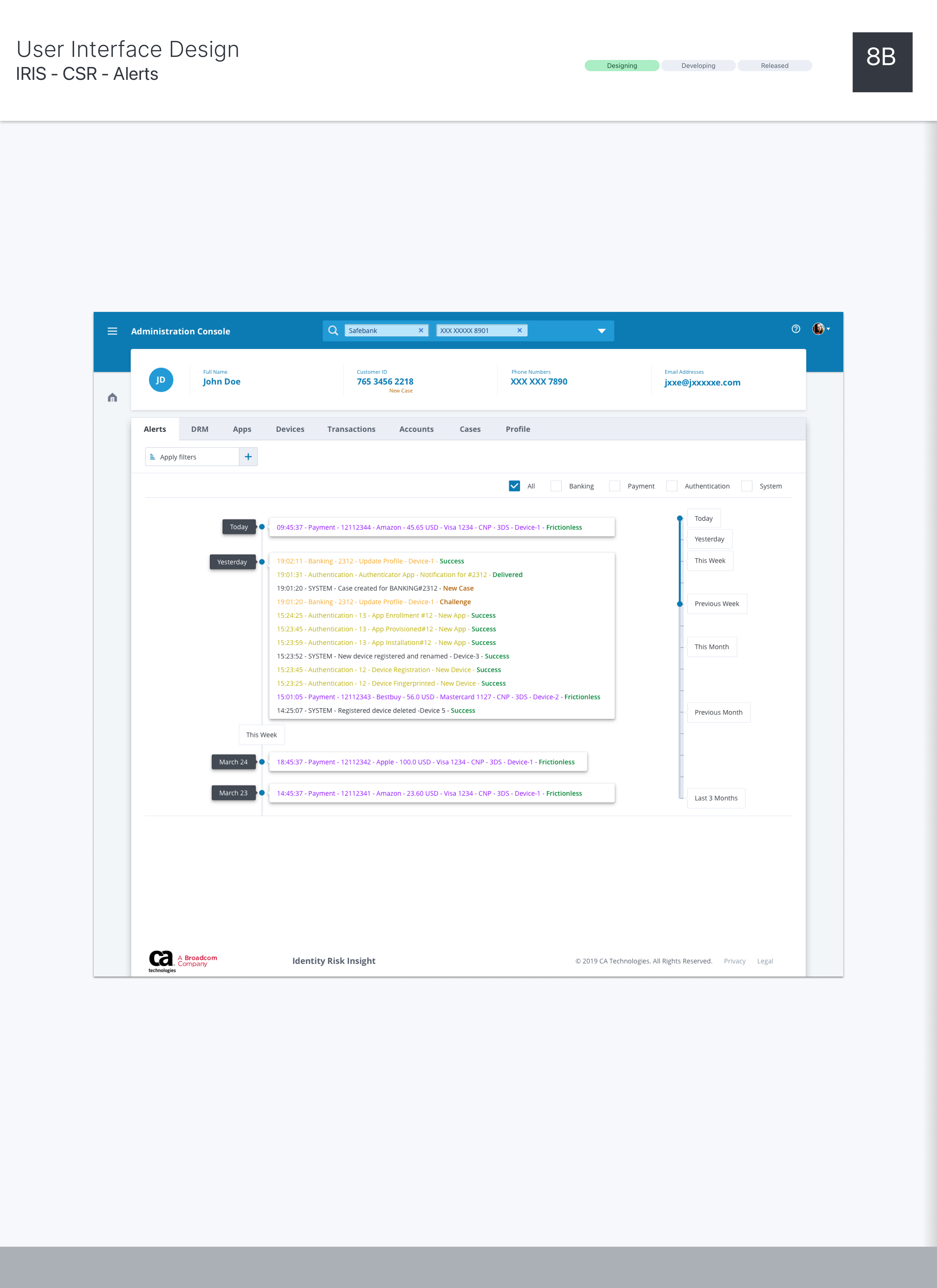
For each persona, I identified the most important workflows and prioritized them for the MVP. I created high-fidelity mockups that mimicked actual implementation—detailed enough that developers and stakeholders could see exactly what we were building.
I validated concepts with existing bank customers and conducted an in-person session with a bank in France. Their feedback shaped refinements to the design.
The Solution
A unified platform combining fraud prevention with consistent authentication across all channels:
Cross-Channel Risk Intelligence
Real-time data sharing across online banking, mobile apps, and e-commerce. The system finally sees the whole customer, not just isolated transactions.
Adaptive Authentication
Strong authentication when risk is high, frictionless access when the system recognizes normal behavior. Customers aren't constantly proving they're themselves for routine actions.
Machine Learning & Predictive Analytics
Real-time risk scoring that adapts to evolving fraud patterns. The system learns from millions of transactions to make accurate decisions at scale.
PSD2 Compliance Built In
Designed from the ground up to meet regulatory requirements without bolting compliance on afterward.
Role-Based Interfaces
Separate screens tailored to each persona's needs. Fraud strategists see different information than customer support reps—everyone gets what they need to do their job.
Implementation Challenges
The project faced significant obstacles:
Resource Constraints
Lack of available frontend developers and insufficient funding led to a 6-month MVP delay.
Corporate Acquisition
Broadcom acquired the parent company in April 2018, shifting priorities toward large preferred customers. All non-critical projects, including this one, were put on hold.
Partial Completion
Only a few screens for the Customer Support Representative persona were completed. To compensate, the company extended an existing product (Risk Analytics) to support screens for other personas.
Frontend Development
Built with React, but development was paused before most interfaces were implemented.
Results
What We Achieved:
The completed Customer Support Representative screens received excellent user satisfaction scores. The fraud prevention functionality that was implemented met banks' expectations.
What We Didn't Achieve:
The full vision of unified cross-channel authentication remained unrealized. The project was officially closed and shelved due to the business priority shift after the acquisition.
What I Learned
Secure Funding for the Full Journey
Even great UX work can't survive business realities. Securing commitment and funding for the entire MVP—not just phases—is essential. Corporate acquisitions can derail projects instantly if they don't align with new strategic priorities.
Adaptability Matters
When this project stalled, extending the existing Risk Analytics product to fill some gaps proved to be a viable strategy. Sometimes you have to salvage what you can from incomplete work.
Stakeholder Alignment at All Levels
Alignment with immediate stakeholders wasn't enough. The parent company's acquisition and resulting priority shift caught everyone off-guard. Future projects need buy-in at the highest levels, especially in companies facing potential M&A activity.
The Value of User-Centered Design Still Shows
Despite the project's incomplete state, the positive feedback on completed screens validated the approach. The work we did still demonstrated that user-centered design creates better products—it just didn't get the chance to prove it at scale.
Reflections
This project taught me that excellent design work doesn't guarantee project success. Business realities—acquisitions, funding, resource availability—matter just as much as the UX.
The partial implementations and learnings from this project likely informed future initiatives in digital banking security. Even incomplete work has value if you learn from it.
Credits
Bank Customers (France and others): Validation sessions and feedback
Product Managers: Requirements and prioritization
Technical Architects: System architecture
Risk Analytics Team: Extended functionality to compensate for incomplete implementation
Project Status: Discontinued due to corporate acquisition and business priority shift (April 2018)
Selected Works
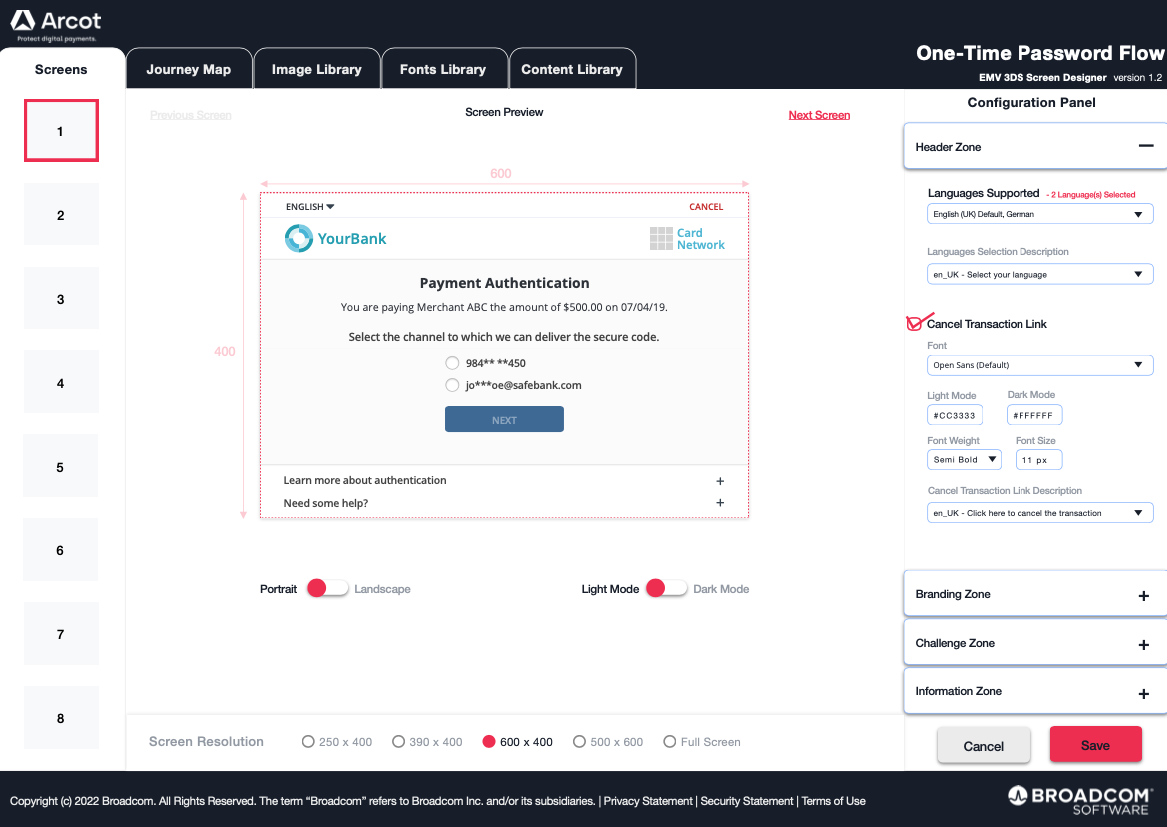
Cap EditorEnterprise SaaS / B2B
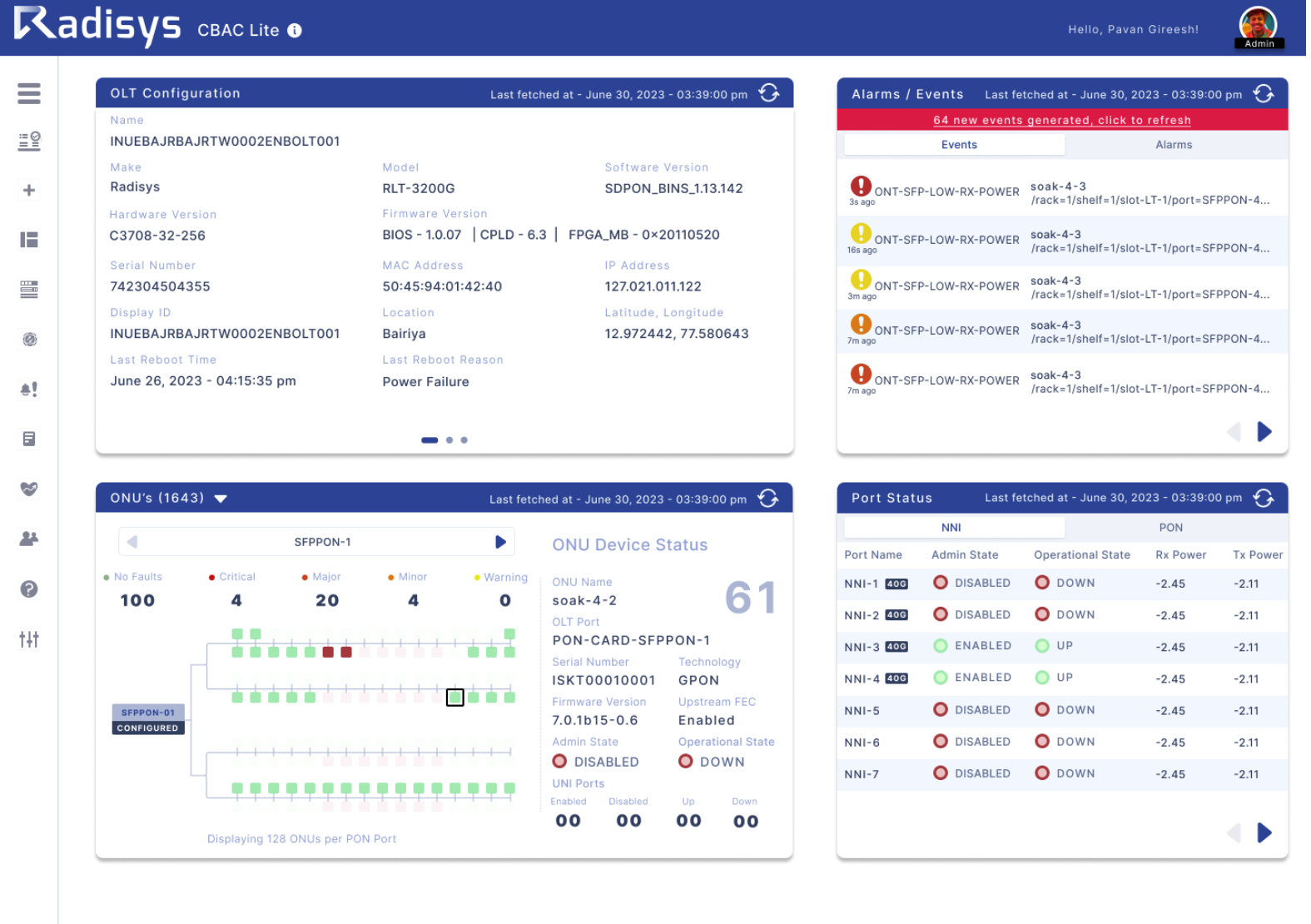
CBAC LiteEnterprise SaaS / B2B
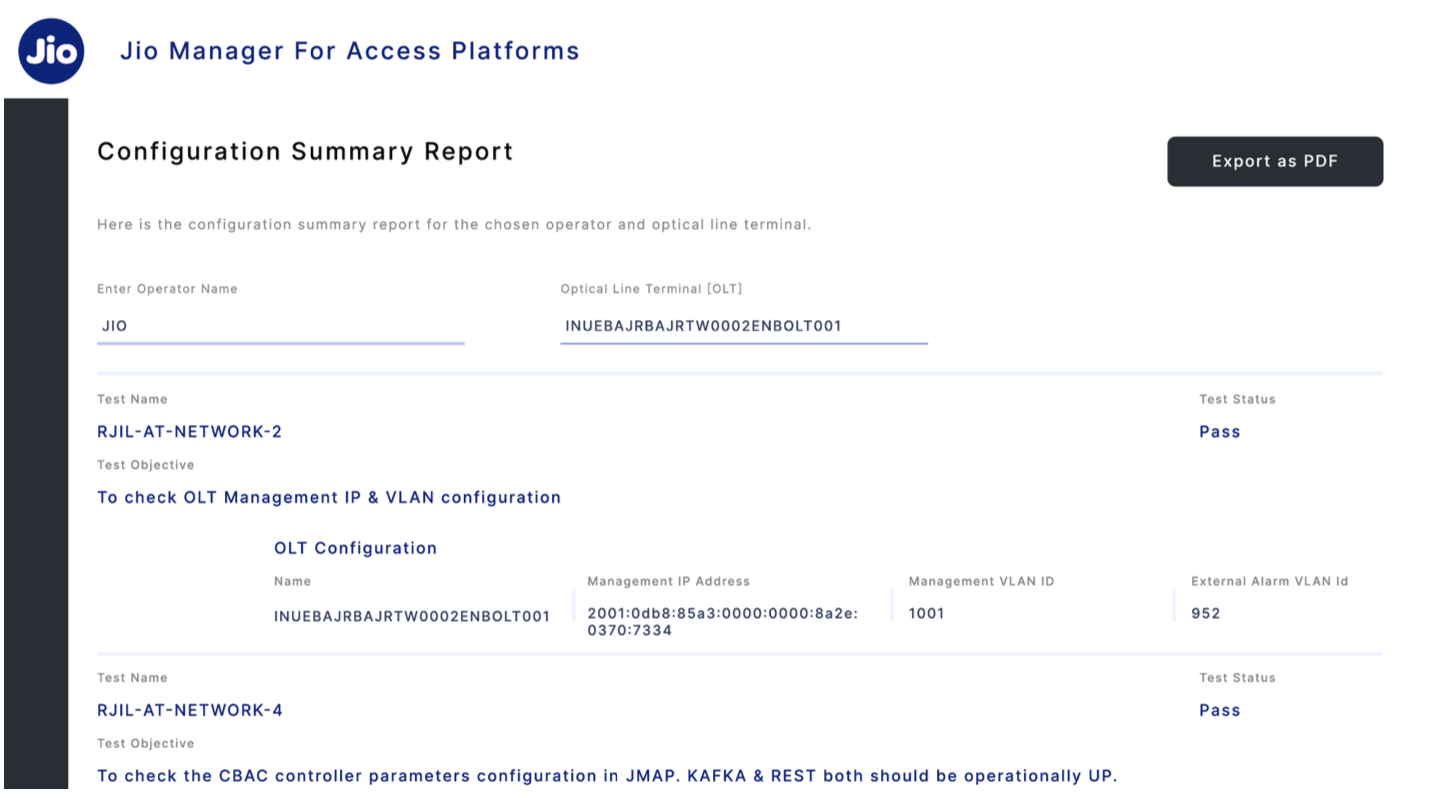
RMSEnterprise SaaS / B2B
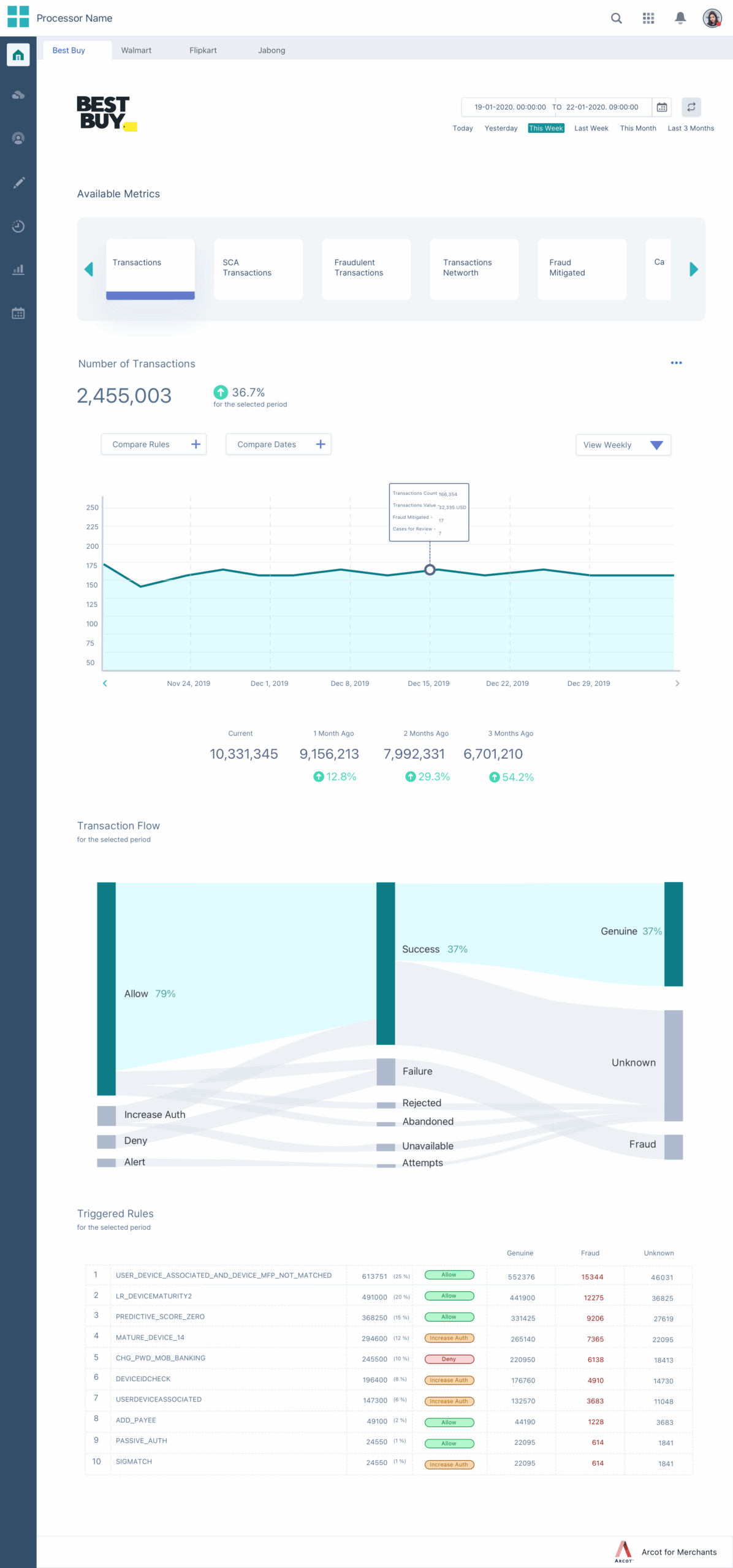
Merchant Risk AnalyticsEnterprise SaaS / B2B
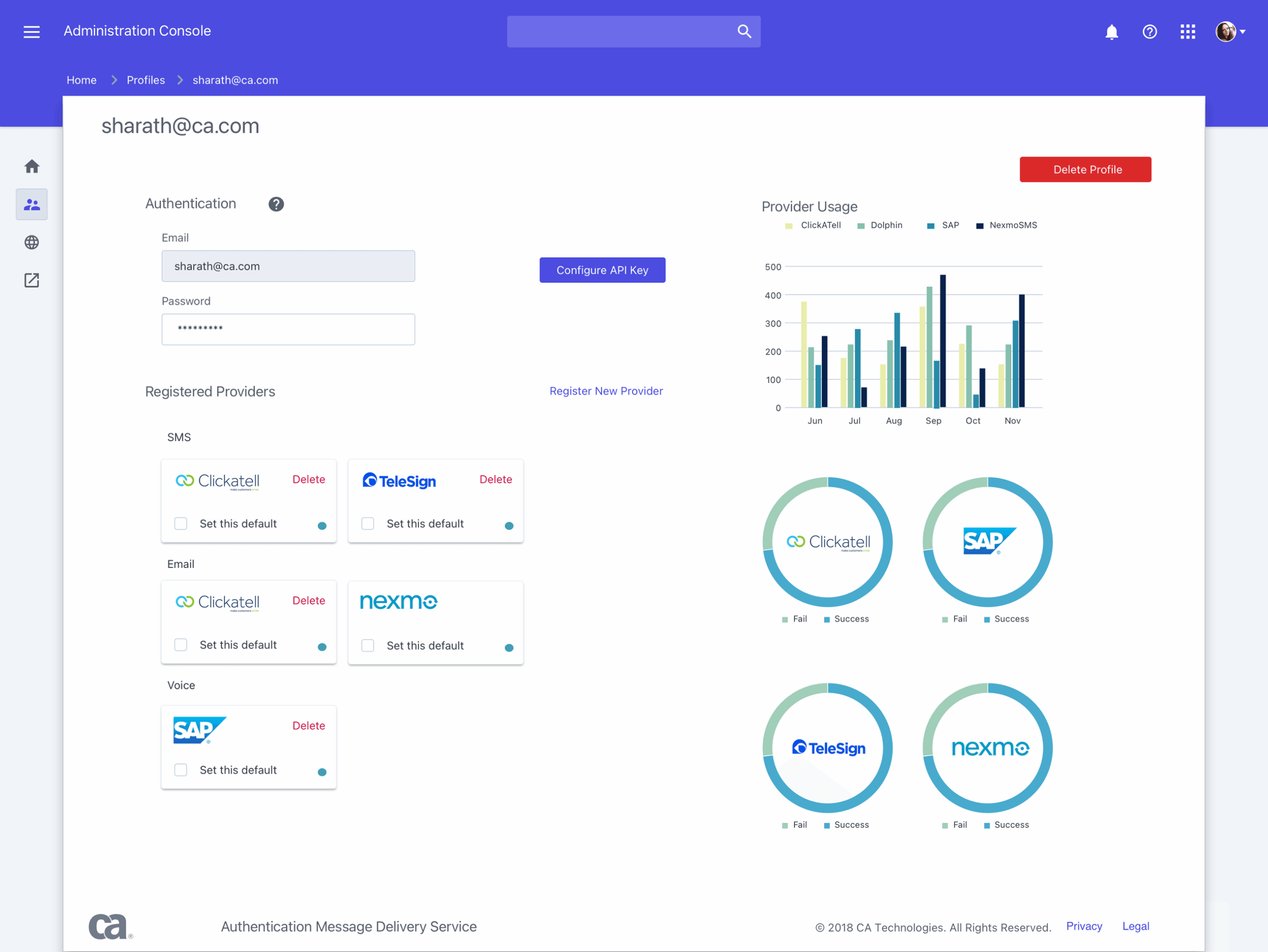
Message Delivery ApplicationEnterprise SaaS / B2B
Digital Banking ApplicationEnterprise SaaS / B2B